
Use this page when the project needs a focused quote path.
304 and 316 quote decisions
304 stainless steel is common for industrial covers and brackets. 316 may be selected when corrosion exposure is higher, but availability, cost and finish requirements should be confirmed before quote.
Fabrication and finish risk
Stainless parts need burr control, grain direction, weld discoloration review and surface protection planning. Brushed or passivated finishes should define visible faces and acceptance expectations.
Inspection notes
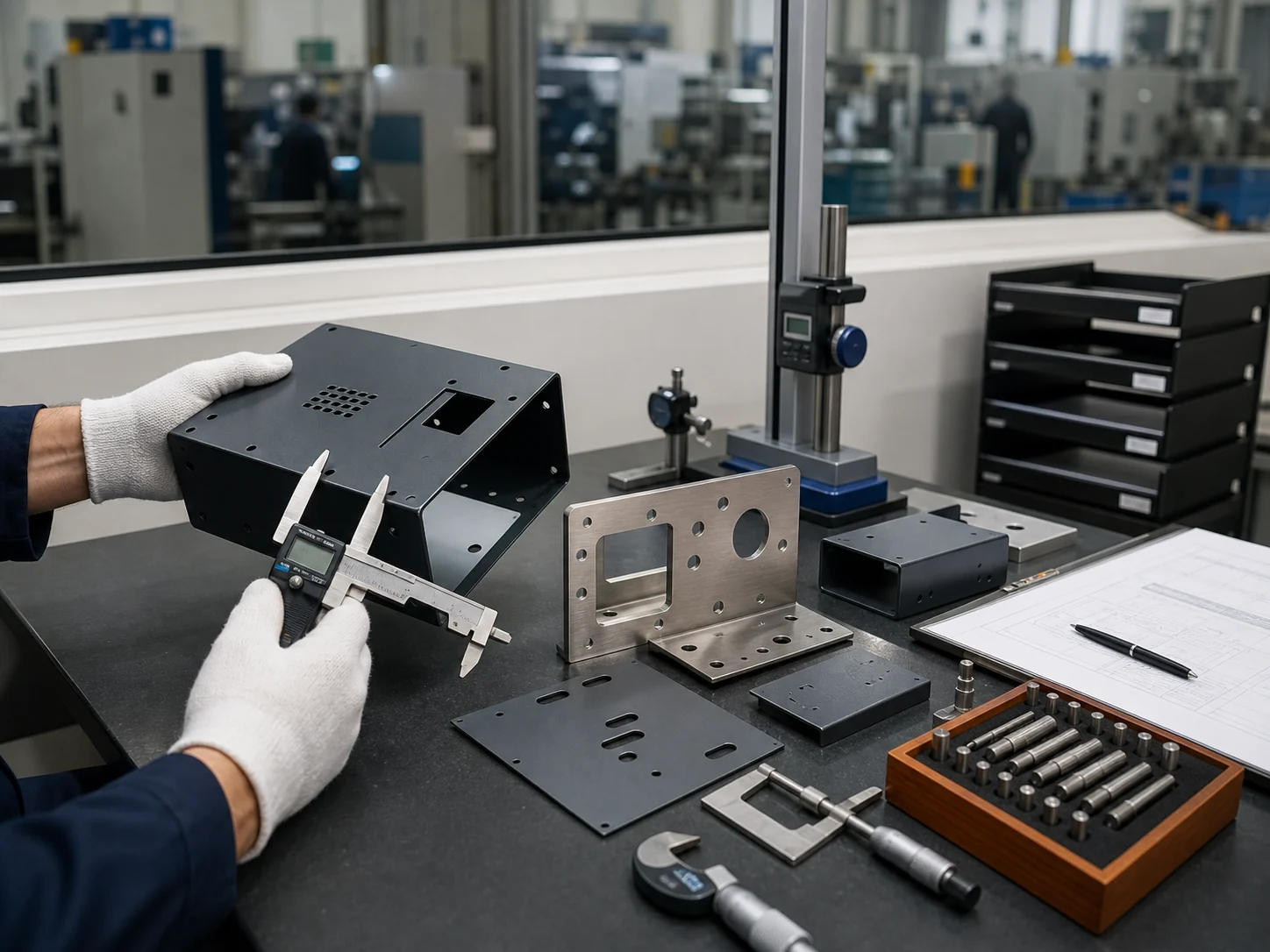
Critical holes, formed angles and flatness requirements should be marked before production. If the part interfaces with equipment, first article dimensions are more useful than general photos alone.
Direct answers for this RFQ path
Which aluminum is common for formed enclosures?
5052 aluminum is often a practical choice for formed enclosures and panels because it bends more easily than 6061 in many sheet metal applications.
When is stainless steel a better choice?
304 or 316 stainless steel can be a better choice when corrosion resistance, cleaning, heat exposure or appearance matters more than low weight or low cost.
Why does material thickness matter?
Thickness affects laser speed, bend radius, minimum flange size, hardware insertion, weight, strength, coating behavior and final part cost.
Can Axmetra suggest material alternatives?
Yes. Material alternatives can be discussed when the buyer shares function, finish, strength, corrosion exposure, cosmetic needs and cost priorities.
| Buyer decision | Manufacturing impact |
|---|---|
| Grade and thickness | Controls material cost, forming tonnage, welding and corrosion expectations. |
| Visible surface direction | Affects brushing, scratches, handling and packing protection. |
| Welding or no welding | Changes discoloration, grinding, passivation and distortion risk. |
| Hole-to-bend distance | Prevents deformation around formed stainless features. |
| Certificate requirement | Material certificate or dimensional report should be requested before final quote. |