
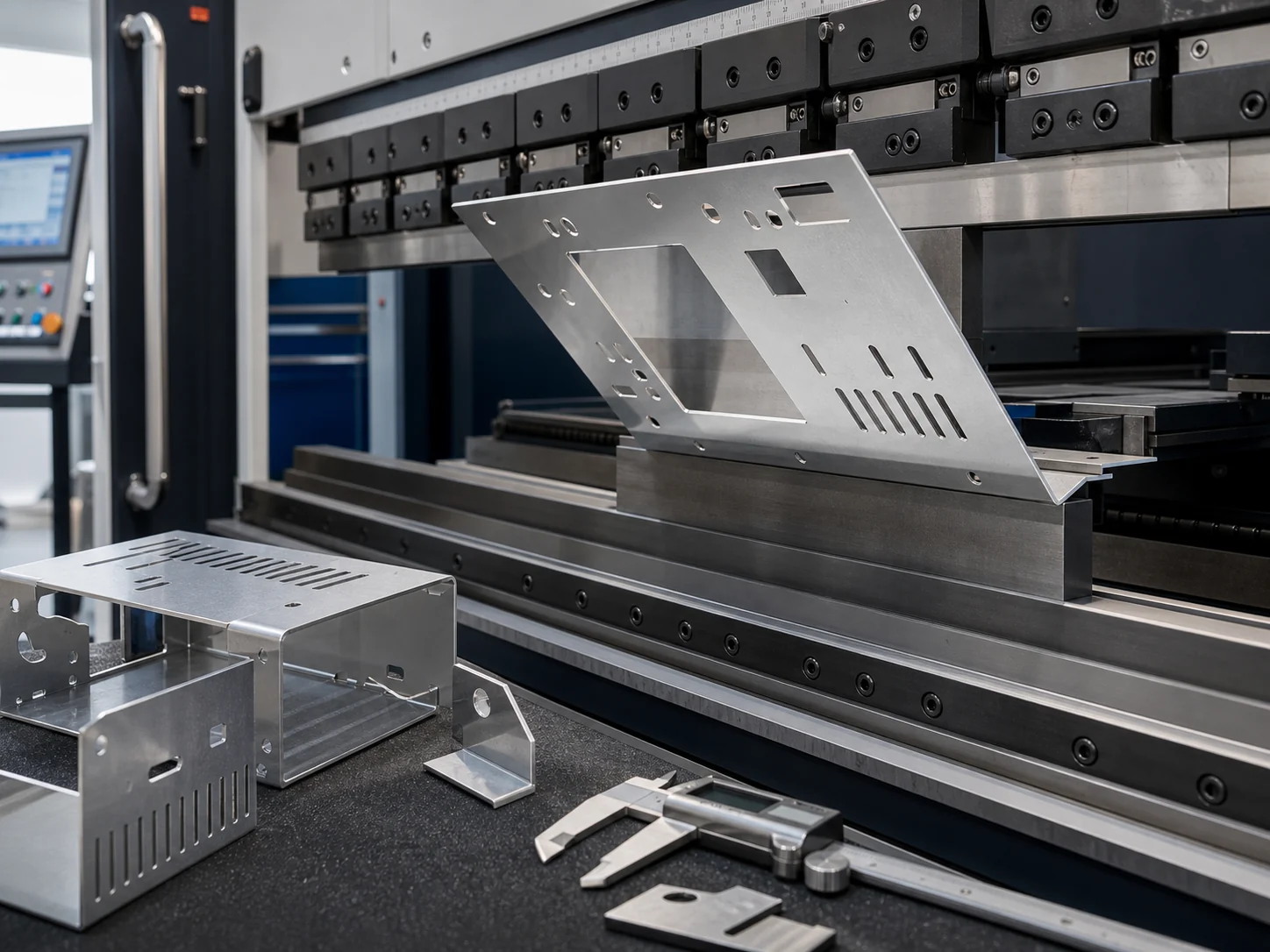
Use this page when the project needs a focused quote path.
Why simple brackets still need review
A bracket may look simple but still fail when holes sit too close to a bend, flanges are shorter than tooling allows, or the drawing does not state which faces and datums matter.
Panel and plate quote notes
Flat panels and mounting plates should define hole sizes, countersinks, tapped holes, cosmetic sides, grain direction, flatness and burr expectations. These notes help separate laser cutting work from formed or finished part risk.
Production review points
Before quote, the reviewer should check material thickness, bend radius, slot and hole distortion risk, perpendicularity, hardware access, finish sequence and whether quantity supports prototype or repeat production tooling choices.
Direct answers for this RFQ path
What should a sheet metal RFQ include?
A practical RFQ should include part type, material, thickness, quantity, file status, process needs, finish, tolerance notes, quality-document needs and target delivery date.
Can sensitive CAD wait until NDA?
Yes. Buyers can send safe context first, such as part family, material, quantity, process route and target market, then share detailed CAD after fit and NDA discussion.
What does the first Axmetra reply cover?
The first reply should identify missing inputs, DFM risks, quote assumptions, material or finish questions, inspection needs and the practical next route.
| Buyer decision | Manufacturing impact |
|---|---|
| Material and thickness | Sets bend radius, laser cutting speed, stiffness and finish options. |
| Bend count and direction | Controls press brake setup, sequence and formed tolerance risk. |
| Hole and slot positions | Determines distortion risk near bends and inspection requirements. |
| Threads or countersinks | Adds tapping, hardware prep and surface-side review. |
| Flatness or perpendicularity | Defines whether first article measurement is needed before release. |