
Use this page when the project needs a focused quote path.
What makes enclosure RFQs different
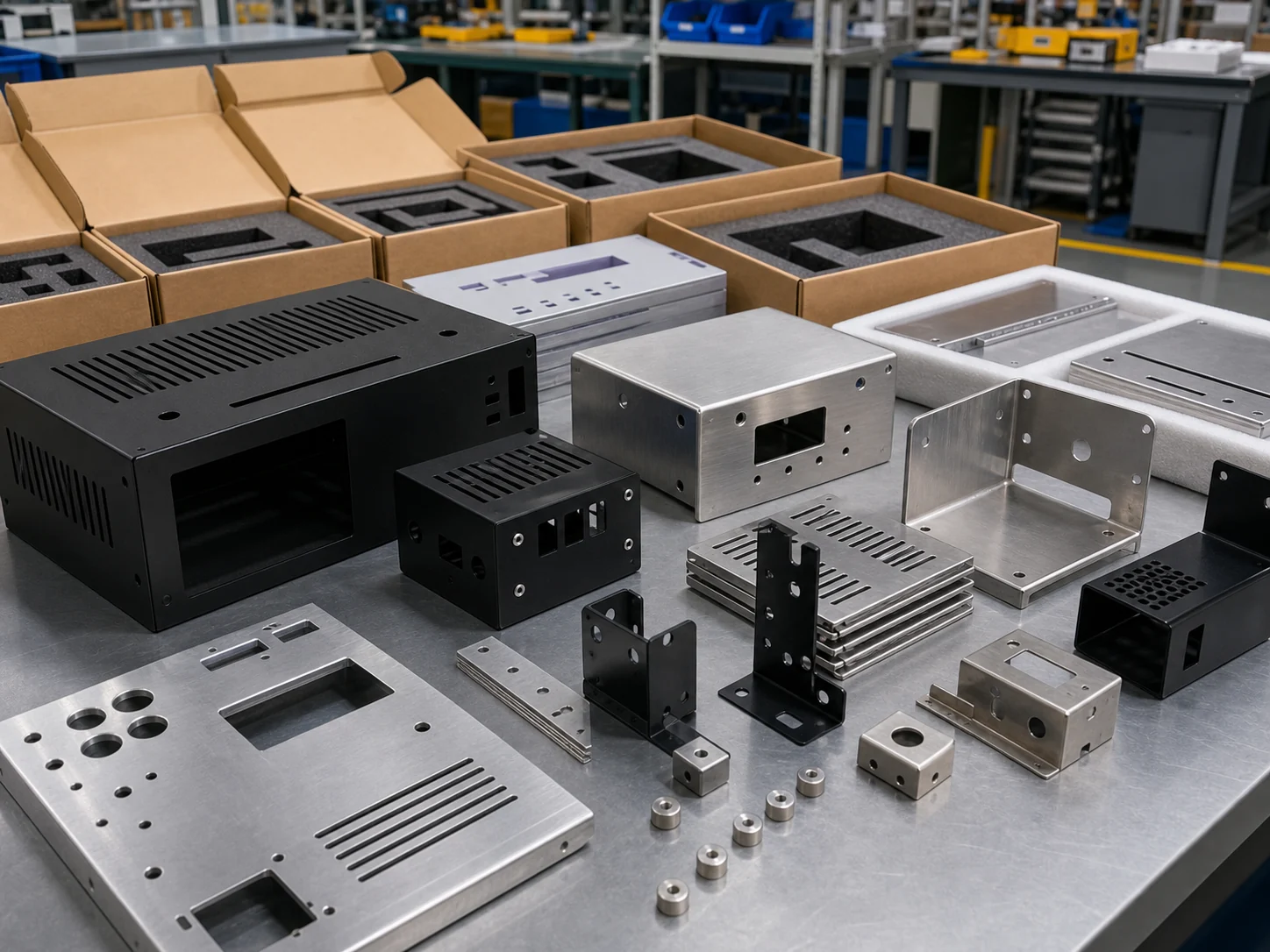
An enclosure is rarely only a folded box. It may include removable covers, connector cutouts, ventilation slots, PEM standoffs, hinges, grounding studs, labels, gasketing surfaces and cosmetic faces.
File package expectations
The strongest package is a STEP model for formed geometry, PDF drawings for tolerances and finish notes, DXF flat patterns when available, and marked screenshots for critical connector or assembly zones.
Production review points
Before quote, the reviewer should check bend sequence, hole-to-bend distance, insert access, coating buildup near openings, grounding masks, part nesting and export packing for finished surfaces.
Direct answers for this RFQ path
What should a sheet metal RFQ include?
A practical RFQ should include part type, material, thickness, quantity, file status, process needs, finish, tolerance notes, quality-document needs and target delivery date.
Can sensitive CAD wait until NDA?
Yes. Buyers can send safe context first, such as part family, material, quantity, process route and target market, then share detailed CAD after fit and NDA discussion.
What does the first Axmetra reply cover?
The first reply should identify missing inputs, DFM risks, quote assumptions, material or finish questions, inspection needs and the practical next route.
| Buyer decision | Manufacturing impact |
|---|---|
| Outer size and formed depth | Controls material use, press brake access, bend sequence and shipping volume. |
| Cutouts and connector fit | Requires tolerance notes and inspection around displays, switches, cable glands and ports. |
| PEM standoffs and grounding | Needs panel thickness, insertion side, masked areas and thread protection. |
| Door or cover interface | Changes gap, hinge, fastener and assembly fit review. |
| Cosmetic finish | Defines powder coating, anodizing, brushing, masking and packing expectations. |
Related quote paths
Compare enclosure RFQs without losing scope
Enclosure quotes are comparable only when drawing revision, material, finish and inspection basis match. Keep a photo-based estimate marked provisional until dimensions and interfaces are confirmed; use the worksheet to expose the open assumptions.
- Drawing and assembly revision
- Record the same 2D/3D revision, units and enclosure assembly scope. Identify mating parts, hardware and purchased components; mark any dimensions inferred from photos as unconfirmed.
- Material and thickness
- Specify alloy or grade, thickness and any permitted substitution. Ask suppliers to flag alternatives explicitly rather than comparing different material assumptions as the same offer.
- Bends, joints and critical interfaces
- List critical mounting datums, hole patterns, thread requirements, weld locations and acceptable distortion. Agree which dimensions require inspection after bending, welding or assembly.
- Finish and masking
- Compare the same coating or surface treatment, color/texture reference and appearance faces. State masking or conductive contact areas and responsibility for any required shielding validation.
- Batch price and setup
- Use the same batch quantity and delivery split. Separate programming, fixtures, tooling, finishing setup, hardware and assembly so a low part price does not hide excluded work.
- First article and shipping release
- Ask which first-article measurements and finish records are included, who approves them, and how changes affect cost and timing. Compare packing, freight basis and destination separately.
Download the blank sheet metal enclosure quotation comparison (CSV)
Worksheet version 1.0. Fill in two suppliers' actual quotations and revisions; no supplier prices or results are prefilled. Resolve exclusions before comparing totals. After scope approval, use the project review record to track revisions and decisions.